Autumn arrangements do not have to depend on the familiar combination of pumpkin orange, rust, and metallic gold. Although these colors remain strongly associated with the season, fall can also be expressed through atmosphere, texture, seasonal materials, and the changing quality of natural light.
A composition may feel distinctly autumnal because of its dry grasses, sculptural branches, papery seed pods, or deepening shadows—even when its flowers are cream, blush, lavender, charcoal, burgundy, or green.
Here are three alternative directions that offer a broader, more sophisticated approach to seasonal design.
1. Moody Arrangements: Drama and Depth
Moody autumn arrangements create atmosphere through layered, near-black color rather than seasonal novelty. They feel intimate, dramatic, and deeply rooted in the fading light of the season.
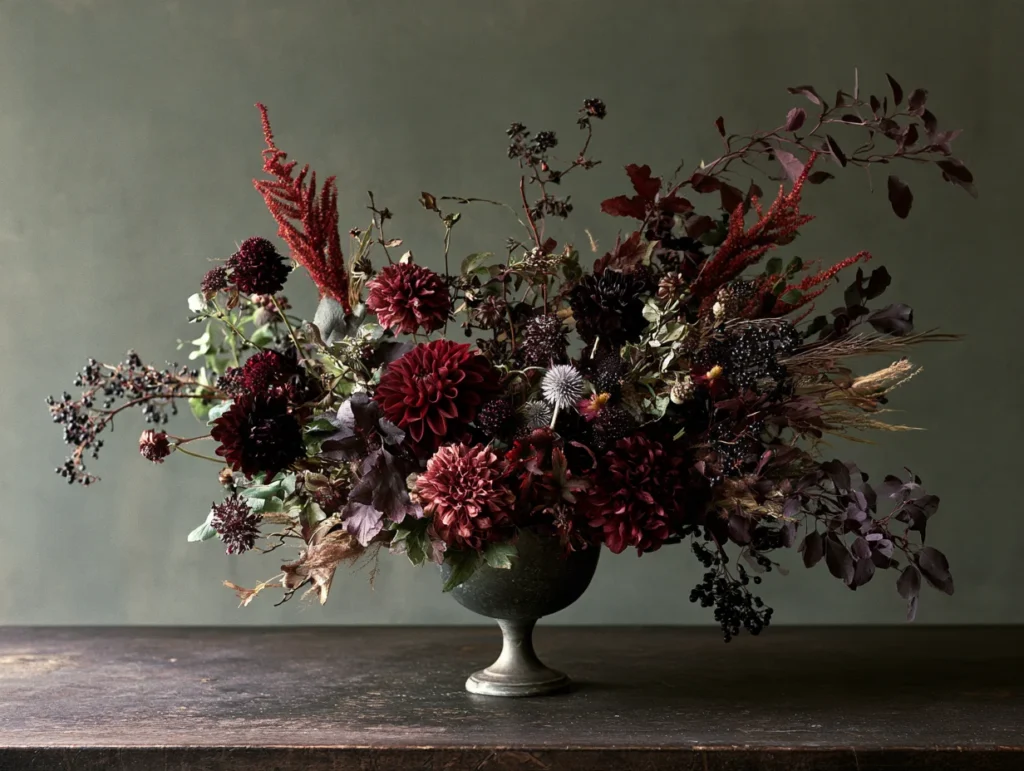
The Color Palette & Botanicals
Build your foundation with saturated, shadowed tones:
- Base Colors: Wine, plum, blackberry, oxblood, deep navy, chocolate brown, charcoal, and inky green.
- Velvety Blooms: Dahlias and scabiosa contribute rounded, rich textures.
- Vertical Movement: Amaranth and celosia introduce distinctive height.
- Textural Accents: Privet berries, smoky eucalyptus, dried grasses, and dark foliage add depth without brightening the palette.
- Architectural Elements: Branched silhouettes can extend beyond the main cluster, giving the design an expressive outline.
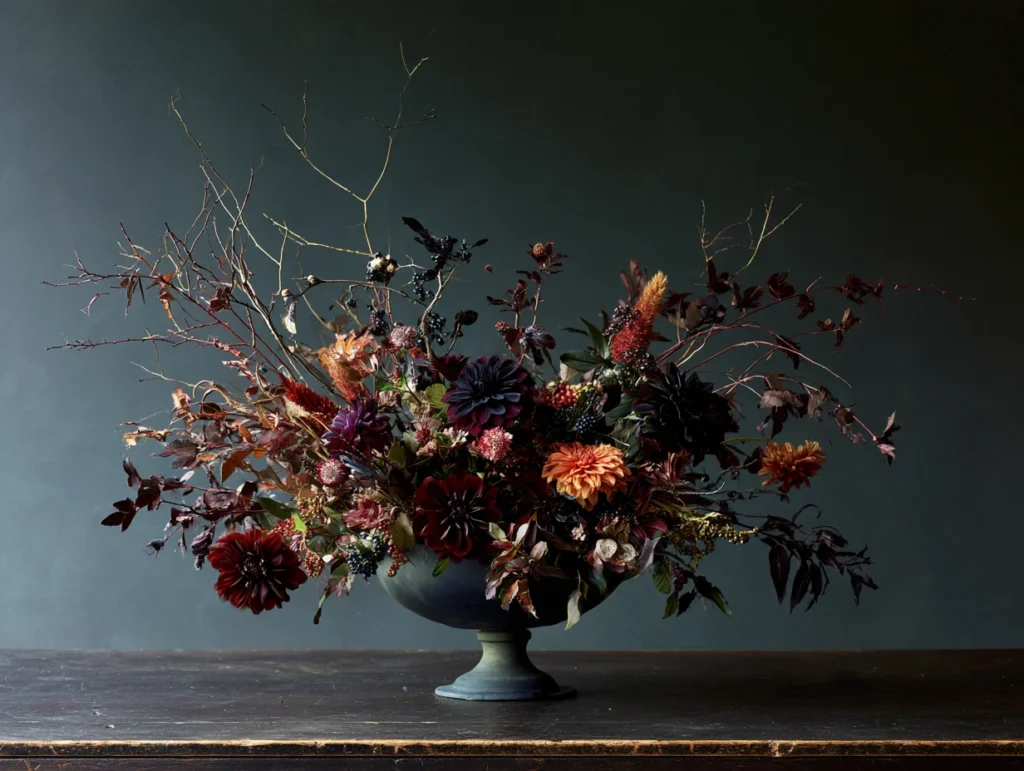
Creating Depth
Depth is essential when working with dark flowers. To prevent the arrangement from looking flat:
- Mix Finishes: Combine matte petals with glossy berries or eucalyptus leaves.
- Contrast Shapes: Place soft blooms beside angular seed heads and crisp stems.
- Layer Tones: Use several tonal variations (e.g., a wine dahlia beside plum scabiosa, or charcoal foliage near inky green).
- Add Neutral Lifts: Introduce small amounts of ivory, dusty taupe, faded sage, or warm gray. Keep these selective—just a few flowers or leaves to lighten the mood without dominating.
Vessels, Lighting, and Placement
- Vessels: Black ceramic offers a clean, contemporary base; aged metal and stoneware bring restrained rustic character; smoked glass keeps it visually light; rustic wood softens a dramatic palette. Choose a container with enough visual weight to support tall branches, but avoid ornate vessels that compete with the flowers.
- Lighting: Position where directional daylight reveals subtle tonal differences, or use warm, indirect evening light to emphasize the atmosphere.
- Styling: Arrange stems asymmetrically. Allow negative space around the flowers to prevent the design from becoming crowded or “Halloween-like.” A loose outline and varied heights create a sophisticated display.
2. Minimalist Arrangements: Shape, Texture, and Space
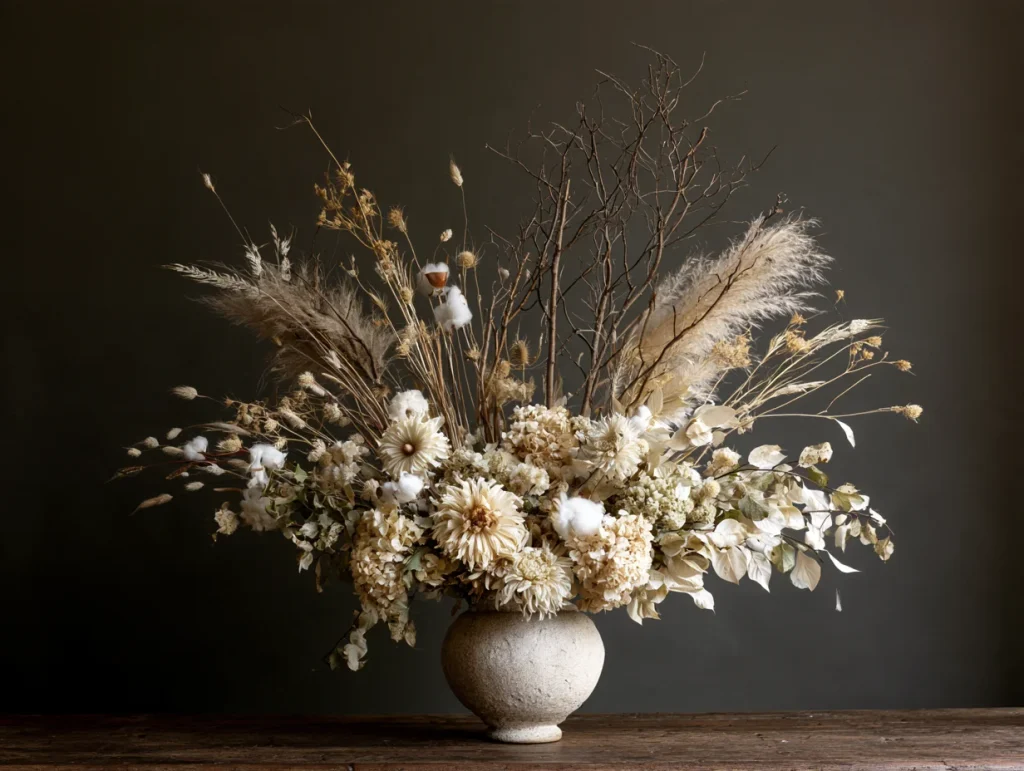
Minimalist autumn arrangements reveal the season through shape, texture, and material rather than saturated color. This approach creates a calm interpretation of fall while preserving visual warmth.
The Neutral Palette
A restrained palette echoes dried grasses, bark, stone, and fading foliage:
- Core Tones: Ivory, sand, oatmeal, mushroom, soft gray, muted olive, and weathered brown.
Botanical Forms & Composition
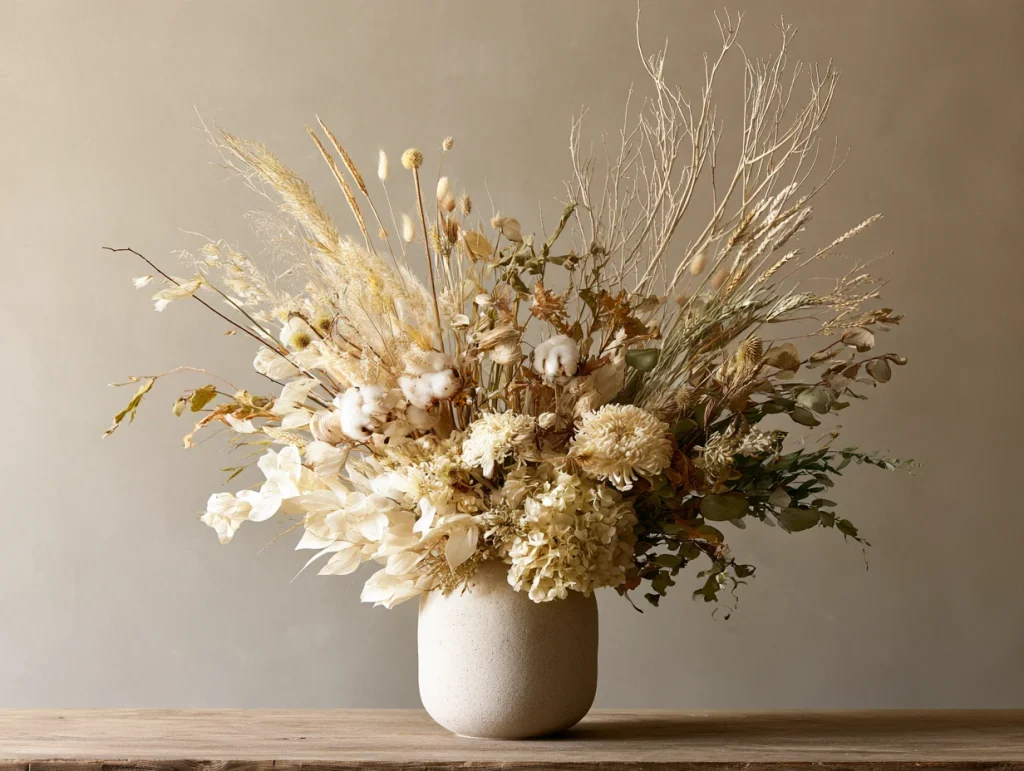
Choose a limited selection of botanical forms and let each one remain visible.
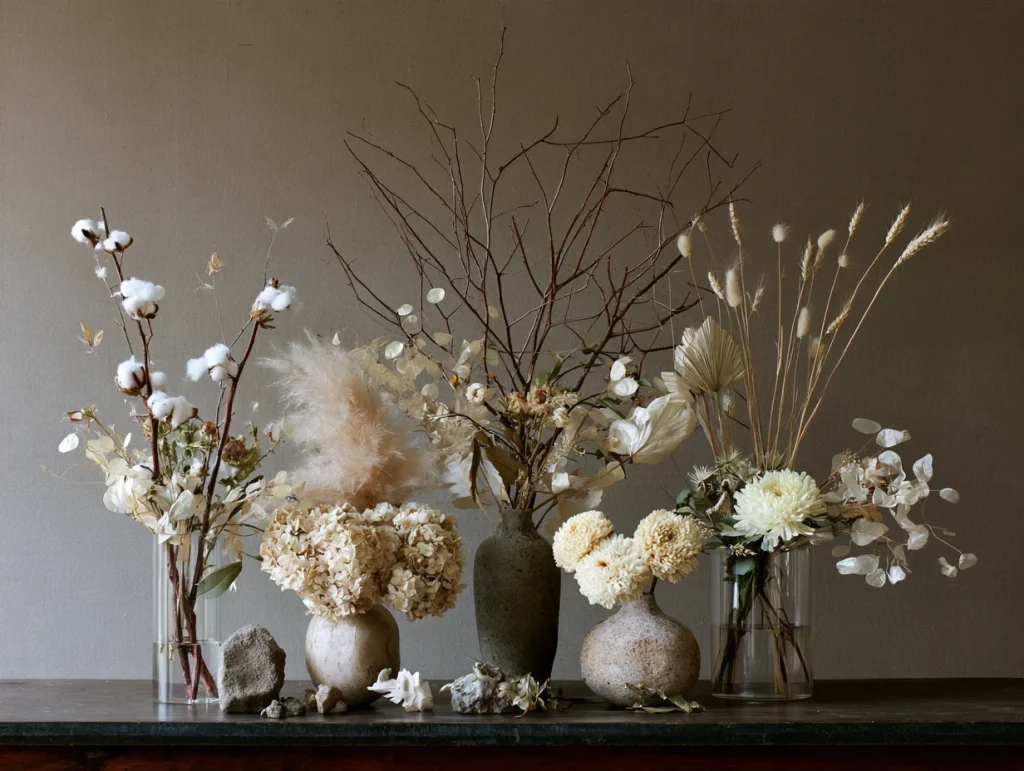
- Airy Movement: Dried lunaria, wheat, pampas grass, and bunny tails.
- Structure: Bleached branches provide height and architectural lines.
- Softness & Contrast: Cotton stems, pale hydrangeas, cream chrysanthemums, eucalyptus, and sculptural leaves.
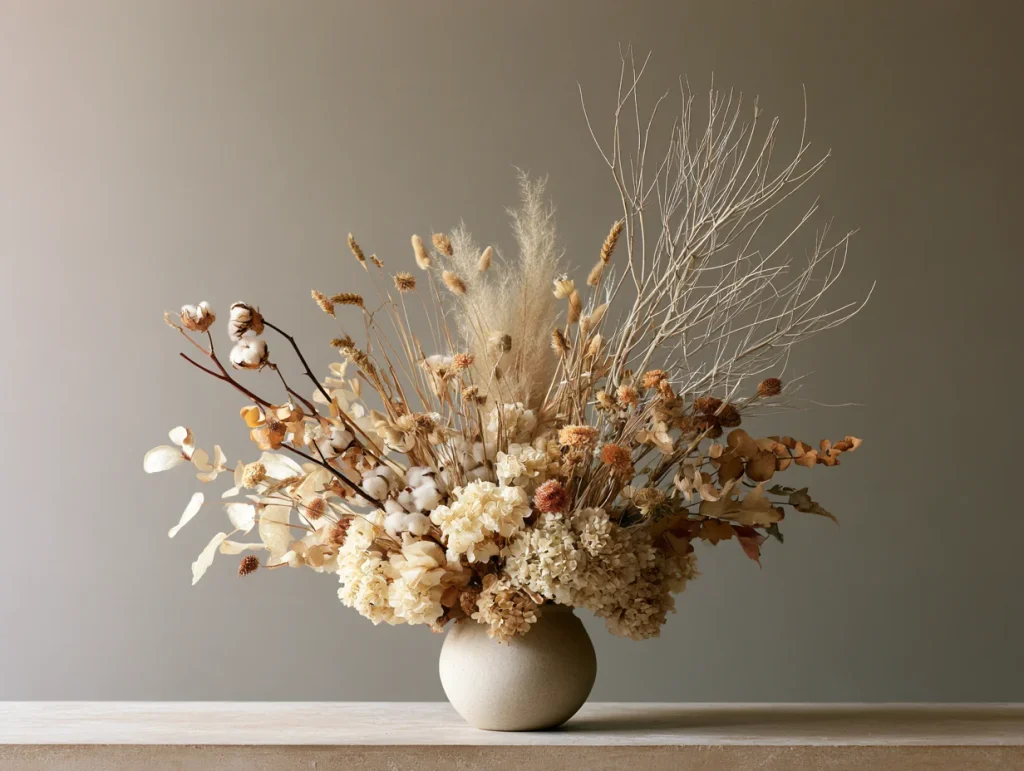
Design Rules for Minimalism:
- Repetition: Repeating one or two forms is often more effective than combining numerous varieties.
- Focal Point: Begin with one focal element (a branching stem, a rounded hydrangea cluster, or a sculptural leaf).
- Asymmetry: Build around the focal point with subtly varied heights. Keep the overall shape slightly asymmetrical.
- Negative Space: Generous negative space is essential. It gives quiet neutrals room to breathe and makes every curve, seed head, and irregular edge more noticeable.
Vessels
The vessel should support this understated aesthetic. Opt for unglazed pottery, clear glass, concrete, or light wood. Minimalism does not require a sterile finish; irregular stems, crisp dried textures, and a gently organic imbalance preserve the natural character of the season.
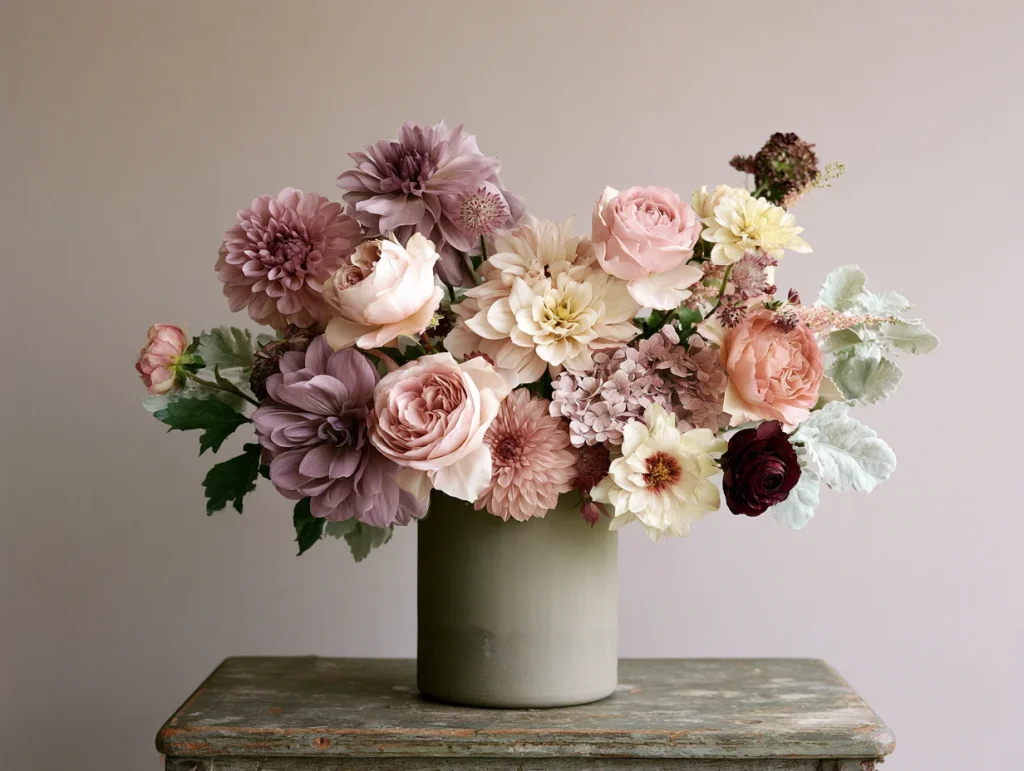
3. Pastel Arrangements: Softened and Grounded
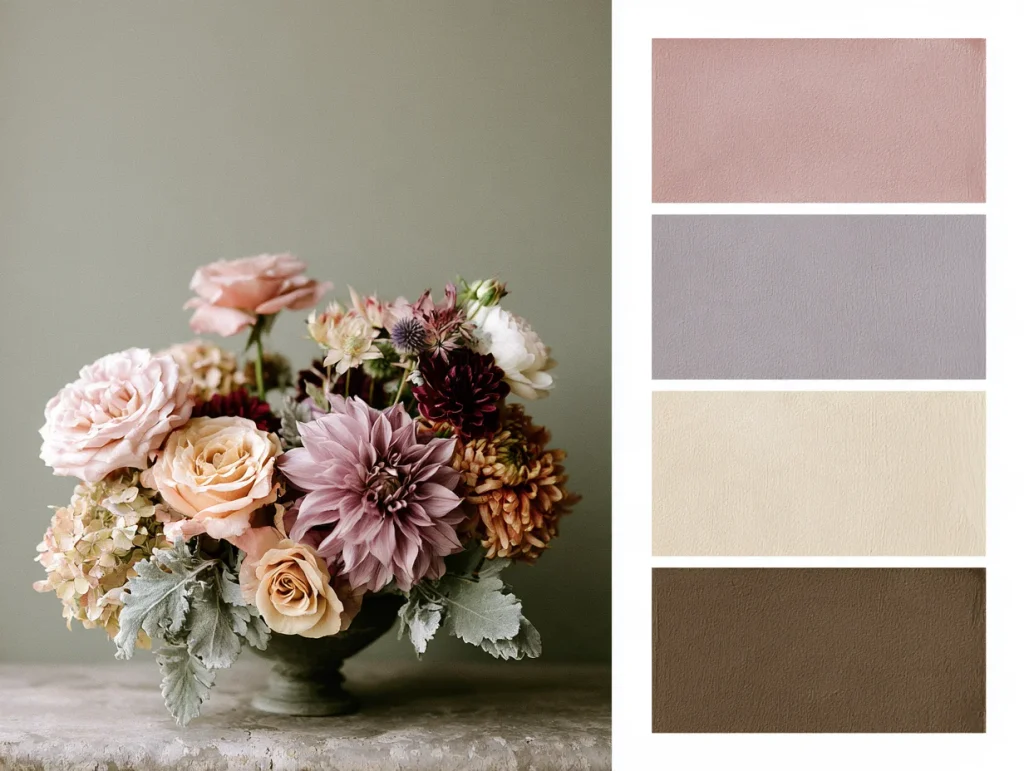
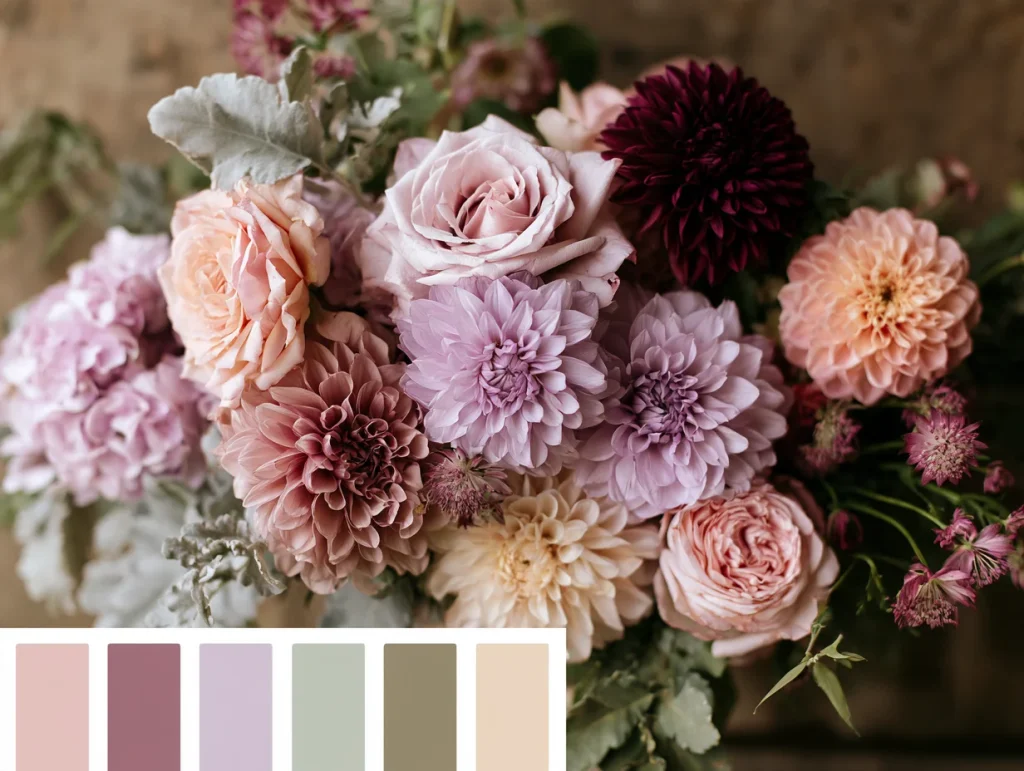
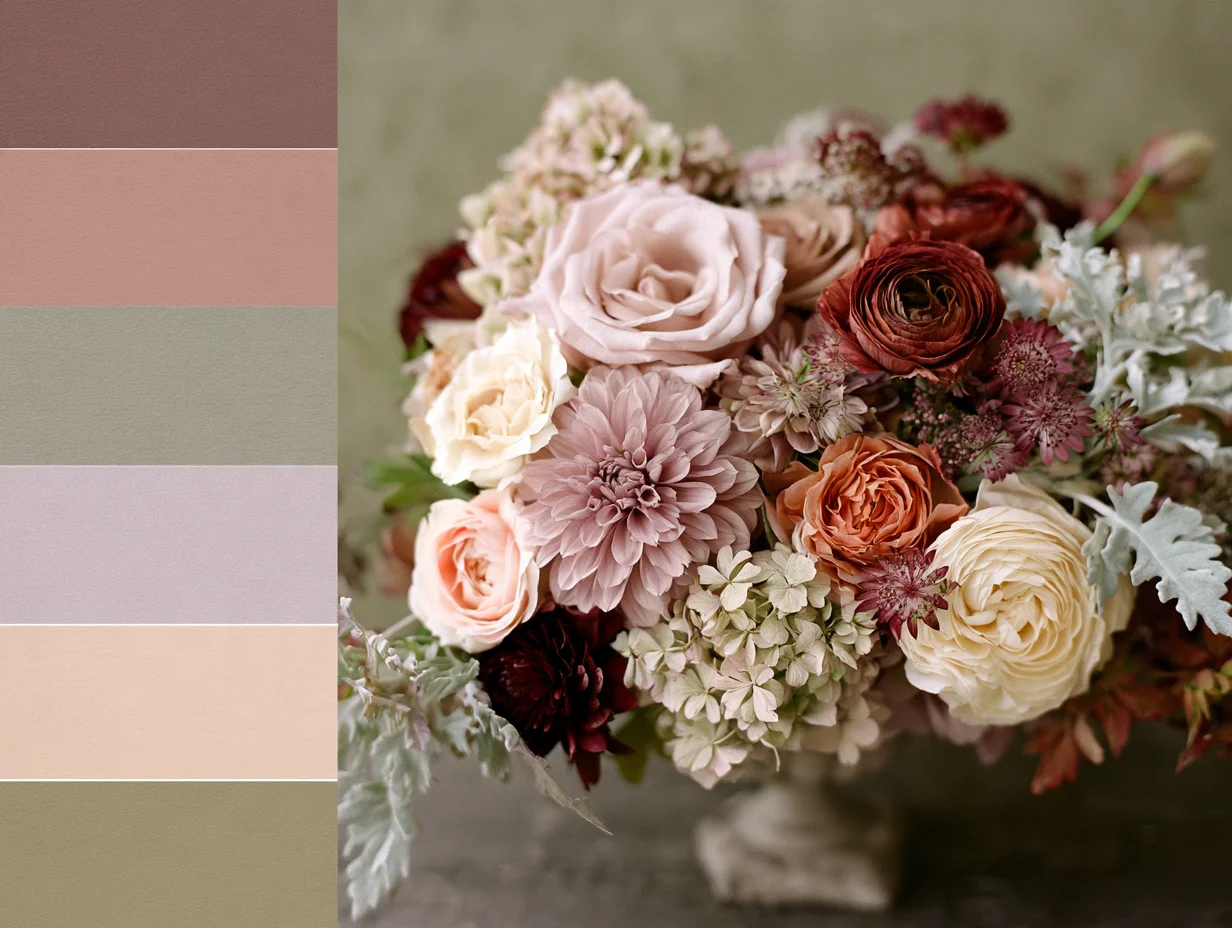
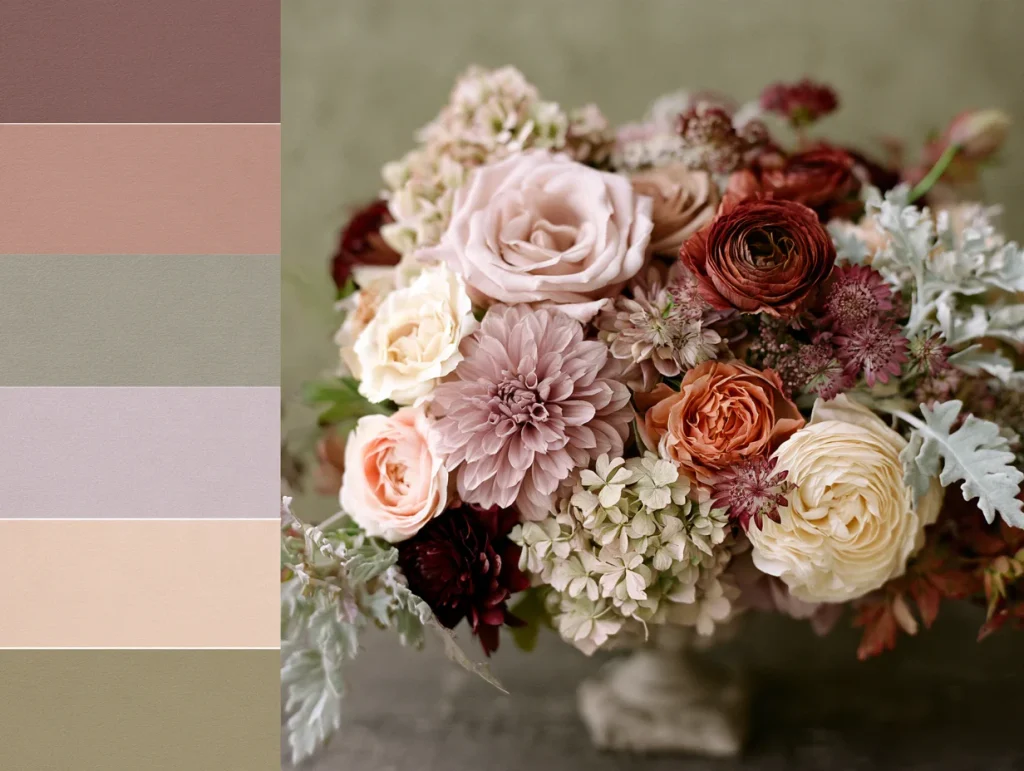
Pastel colors can feel distinctly autumnal when they are softened, desaturated, and balanced with grounded seasonal tones. This approach retains a gentle, luminous quality while reflecting fall’s quieter atmosphere.
Color Combinations
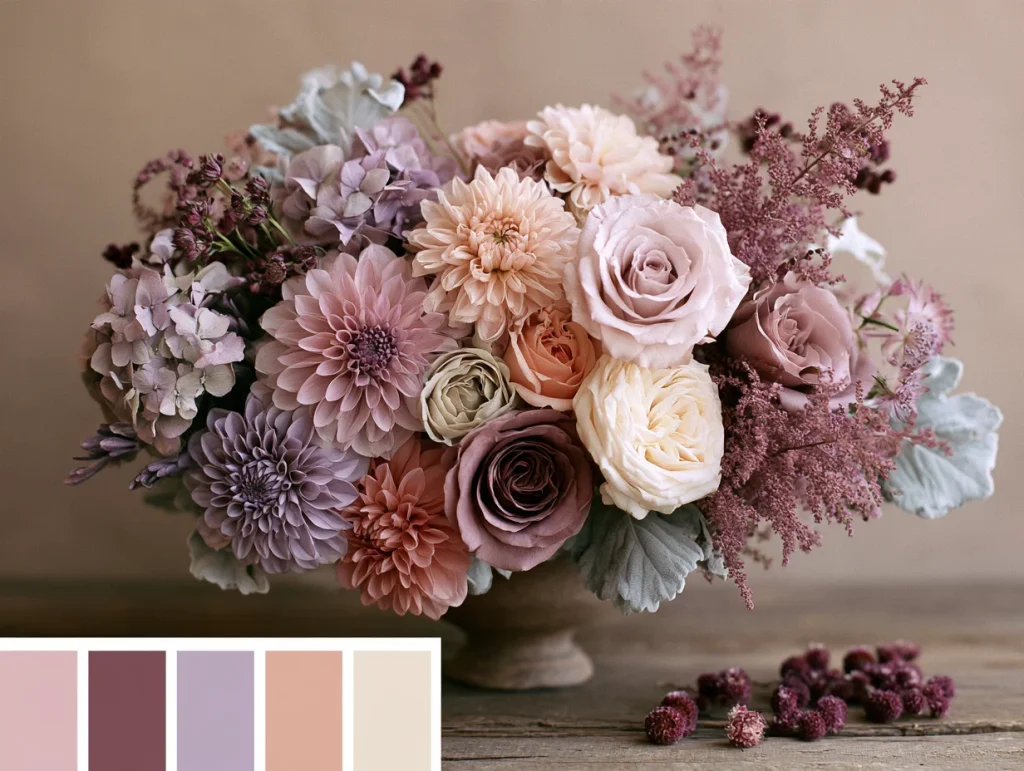
Instead of bright spring pink or clear lilac, pair softened hues with earthy anchors:
- Dusty blush with mauve and taupe
- Lavender with gray-green
- Pale blue with mushroom brown
- Peach with faded burgundy
- Buttercream with olive
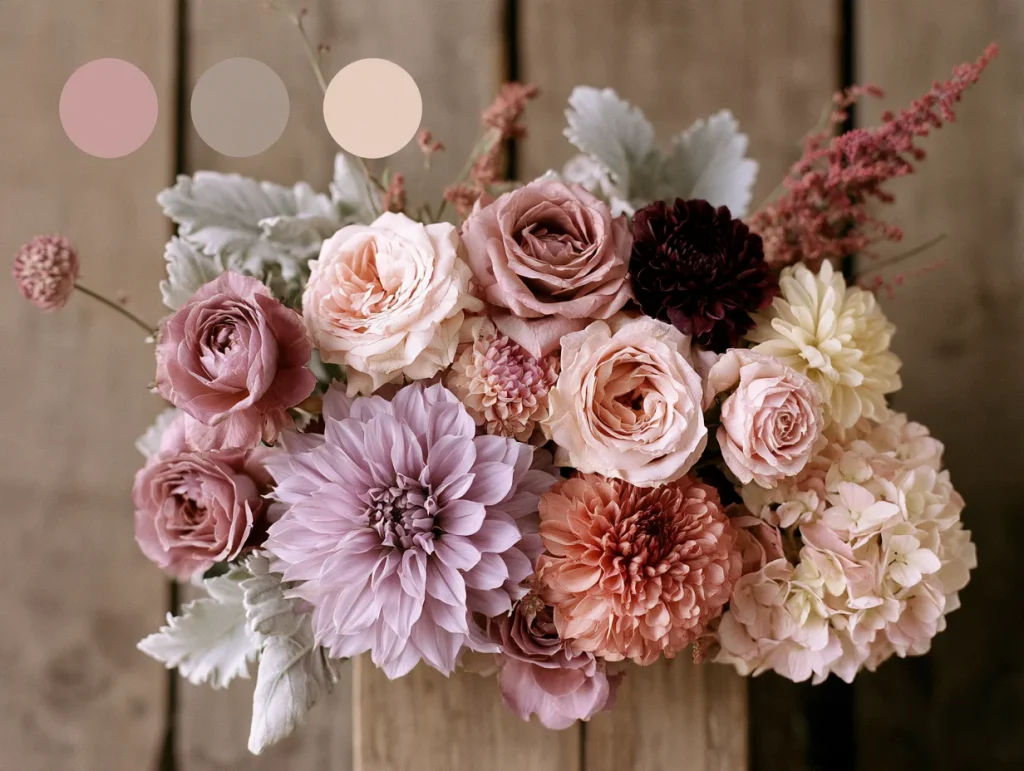
Soft blooms like blush roses, mauve dahlias, pale chrysanthemums, and hydrangeas provide color, while dusty miller and muted foliage add a restrained gray-green foundation.
Adding Autumnal Weight
To keep a pastel arrangement from appearing overly springlike, introduce contrast through texture and age:
- Botanical Weight: Dried grasses, berries, weathered branches, and darker stems lend visual weight.
- Vessels: An antique ceramic pitcher, tarnished metal bowl, or smoked glass vase grounds delicate blooms.
- Textiles: Linen creates an informal setting, wool adds warmth, and velvet brings depth for evening displays.
- Landscape Connection: Tuck in a few faded leaves or dried seed heads to connect the arrangement to the changing outdoors.
Styling by Scale
Scale should guide where and how you style your pastel arrangements:
- Dining Table: Use a low, spreading arrangement (e.g., pale chrysanthemums, mauve dahlias, dried grasses) to allow for conversation.
- Entryway or Mantel: Use a taller vessel where branches can provide height without competing with nearby objects.
- Bedside Table: Choose a compact cluster of lavender, blush roses, and dusty miller.
- Small Gatherings: Repeat one flower or accent across several modest vessels to create cohesion, rather than relying on one oversized centerpiece.
The Ultimate Design Formula
Whichever direction you choose, balance begins with restraint. Combining every recognizable autumn shade can make an arrangement appear busy rather than intentional. A restrained palette gives individual elements room to register and creates a clearer visual mood.
Try this flexible design formula for your next arrangement:
- Select one soft or dominant primary color.
- Add a desaturated companion shade.
- Ground the arrangement with a natural brown, green, or neutral.
- Finish with one seasonal textural detail (like a dried grass plume or weathered branch).
The most successful palette is simply the one that suits the room, the desired mood, and your personal interpretation of fall.